Looking for a neighborhood with real history, not just curb appeal? In Lake Oswego, First Addition stands out because its charm comes from decades of thoughtful growth, modest early homes, and a street pattern that still feels distinct today. If you are drawn to older homes, walkable blocks, and a strong sense of place, this guide will help you understand what gives First Addition its character and why that matters when you buy or sell here. Let’s dive in.
Why First Addition Feels Different
First Addition is one of Lake Oswego’s oldest neighborhoods, with roots that go back to 1888. City planning materials describe it as an early residential area tied to Oregon Iron & Steel landholdings and the housing needs of company workers. As land was sold in the early 1890s, private owners built homes that helped shape the neighborhood’s early identity.
That history still shows up in the neighborhood’s layout. First Addition is known for even blocks, narrow streets, mature trees, and 20-foot alleys that provide rear access. Those alleys are an important part of the streetscape because they reduce the need for front-facing driveways and help preserve a more consistent street frontage.
The neighborhood also has a compact, village-like feel. Planning materials note that it is easy to walk from one end to the other, with civic and commercial services nearby. For many buyers, that physical form is a big part of the appeal.
Historic Homes Shape The Streetscape
One of the most interesting things about First Addition is that it is not defined by a single architectural style. Instead, the neighborhood feels layered and eclectic, with homes from different eras that still work together visually. That mix gives the area a lived-in, authentic character that many buyers appreciate.
City planning documents note that the east side generally contains the oldest homes, while the west end is often more post-World War II in character. Across the neighborhood, you may see Bungalow, Vernacular, Gothic, Prairie, Craftsman, Ranch, and Shed-style homes. In other words, the appeal is less about perfect uniformity and more about a cohesive mix of scale, proportion, and setting.
For sellers, that is an important point. Buyers who are drawn to First Addition are often responding to the overall experience of the neighborhood, not just one home style. The mature trees, porch-forward homes, and smaller-scale historic patterns all contribute to that impression.
Early Homes Tell The Story
Some of the neighborhood’s older homes are especially helpful for understanding how First Addition began. The Oswego Iron Company Cottage at 40 Wilbur Street is documented by the city as one of the surviving employee cottages. It has a one-story rectangular plan, a moderately pitched gable roof, narrow four-over-four sash windows, and very little decorative detail.
That simplicity matters because it reflects the neighborhood’s early roots. Other city-documented vernacular homes, including the Conway House, Brown-Vose House, and Vose House, share similar traits like simple massing, gable roofs, and restrained ornament. These homes help explain why First Addition often feels unpretentious, even when properties have been updated over time.
For buyers, this means character in First Addition often comes from proportion and placement rather than grand detailing. A modest cottage with the right roofline, window rhythm, and relationship to the street can feel just as compelling as a larger home with more decorative features.
Craftsman And Later Styles Add Depth
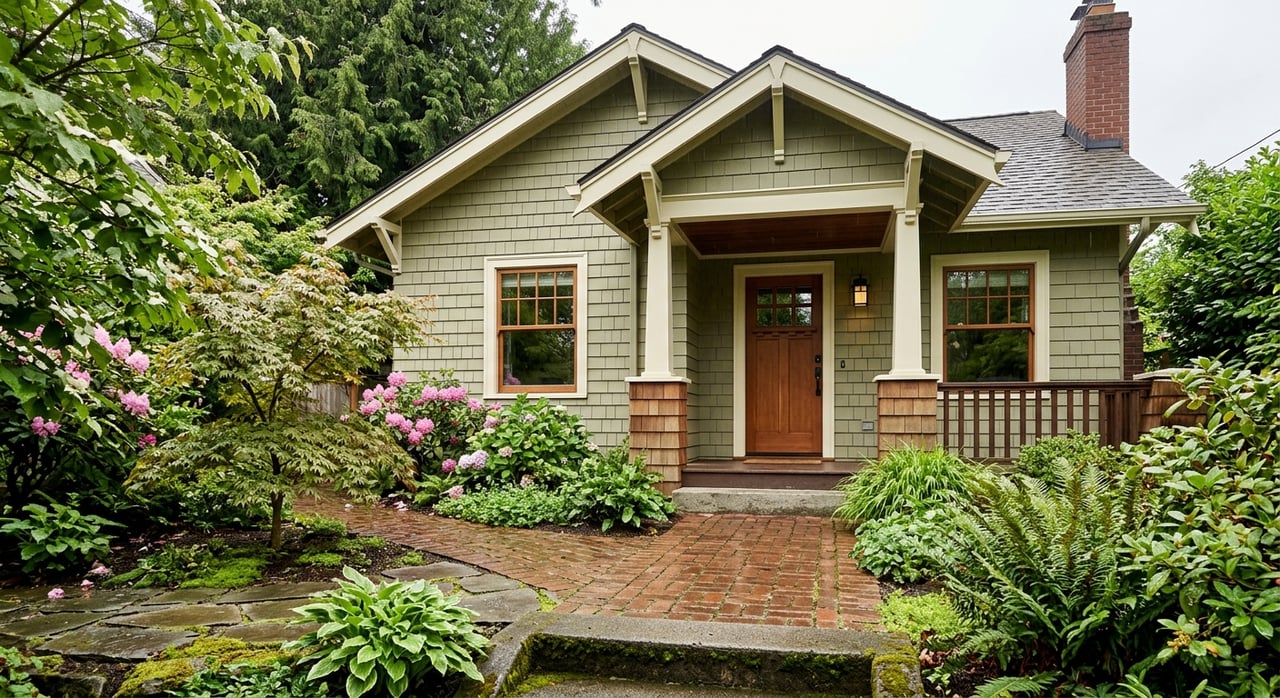
As the neighborhood evolved, later homes added more architectural variety. City records describe the Warren House and Sacred Heart School as fine examples of the Craftsman Bungalow style. Features include low-pitched roofs, deep eaves, exposed rafters or strong porch detailing, and a grounded profile close to the street.
Another documented example is the C. Didzun House, which reflects English Cottage design. The city notes details such as a multi-gable roof, mock half-timbering, metal multi-light casement windows, and a round-headed entry. These later homes bring more visual richness while still fitting into the neighborhood’s established scale.
That balance is part of what makes First Addition special. You are not looking at a museum piece frozen in one decade. You are seeing a neighborhood that developed over time, with homes from different periods contributing to a shared identity.
What Buyers Should Notice In First Addition
If you are shopping for a home in First Addition, it helps to look beyond finishes and focus on the features that create long-term value in this neighborhood. The details that often matter most are the ones tied to scale, setting, and streetscape.
Here are a few things to pay attention to:
- Roof shape and overall massing
- Porch depth and how the home faces the street
- Window proportions and placement
- Wood or wood-like exterior textures
- Rear garage access from alleys, where present
- The visual rhythm between neighboring homes
These features help a home feel connected to First Addition’s established character. Even when a property has been renovated, buyers often respond best when those core elements still feel intact.
Renovation Choices Matter Here
The First Addition / Forest Hills neighborhood plan specifically supports preserving, maintaining, and enhancing the area’s residential character. It also promotes remodeling over demolition and encourages new residences and alterations to be compatible with the size and proportion of existing homes. That guidance helps protect the neighborhood’s look and feel over time.
The plan also encourages garage access from alleys where possible. This may sound like a small planning detail, but it has a big impact on curb appeal. Rear access can help keep front elevations more focused on porches, entries, windows, and landscaping rather than garage doors and driveways.
For homeowners considering updates, the practical takeaway is simple. In First Addition, the strongest improvements are usually the ones that respect the home’s original scale and its relationship to the street.
Landmark Status Versus Neighborhood Character
Not every older home in First Addition is a formal landmark, and that distinction is worth understanding. Some properties are individually designated on Lake Oswego’s Landmark Designation List. Many others are simply older homes that contribute to the neighborhood’s historic feel without having formal protection.
That means a home can still feel deeply authentic to First Addition even if it is not officially landmarked. For buyers, this can open up more options. For sellers, it is a reminder that neighborhood character often comes from the broader streetscape as much as from a single property designation.
What Landmark Homeowners Should Know
If a property is landmarked, Lake Oswego’s homeowner guide says the focus is on exterior changes, not interiors. Ordinary maintenance and painting of previously painted surfaces generally do not require approval. However, changes like replacement windows, siding changes, painting unpainted masonry, sandblasting, and removing distinctive features are typically discouraged.
More significant exterior alterations may be reviewed by city staff or the Historic Resources Advisory Board. The city also offers preservation grants for eligible properties on the Landmark Designation List. Those grants apply to exterior work rather than additions or new construction, and projects must meet the Secretary of the Interior Standards for Rehabilitation as well as Lake Oswego Code Chapter 58.
If you are considering a purchase or preparing a home for sale, these details are worth reviewing early. They can affect project scope, timing, and how you plan improvements.
Why Character Matters In The Market
In a neighborhood like First Addition, character is not just aesthetic. It can shape how buyers experience a property from the moment they arrive. The combination of mature trees, modest historic scale, alley-oriented access, and a pedestrian-friendly setting near downtown creates a lifestyle story that is hard to replicate in newer neighborhoods.
That is why thoughtful presentation matters when you sell here. Buyers are often responding to the whole picture, including how the home fits into the block, how the front elevation meets the street, and whether updates feel consistent with the neighborhood’s established identity. In a character-driven area, those details can help a listing stand out.
If you are buying, local guidance matters just as much. Understanding the difference between simple charm, true period features, and landmark-related considerations can help you make a more informed decision.
If you are thinking about buying or selling in First Addition, working with a broker who understands Lake Oswego’s neighborhood nuances can make the process much clearer. For tailored guidance on pricing, positioning, or finding the right fit, reach out to Kelly Calabria.
FAQs
What makes First Addition in Lake Oswego historic?
- First Addition is one of Lake Oswego’s oldest neighborhoods, with platting that dates to 1888 and early development tied to Oregon Iron & Steel landholdings and worker housing.
What home styles are common in First Addition?
- City planning materials identify a mix of Bungalow, Vernacular, Gothic, Prairie, Craftsman, Ranch, and Shed-style homes throughout the neighborhood.
Are all older homes in First Addition designated landmarks?
- No. Some homes are individually designated landmarks, while many others simply contribute to the neighborhood’s historic character without formal landmark status.
What exterior changes may be restricted on a landmark home in Lake Oswego?
- According to the city’s homeowner guide, changes such as replacement windows, siding changes, painting unpainted masonry, sandblasting, and removing distinctive exterior features are typically discouraged and may require review.
Why do alleys matter in First Addition?
- The neighborhood’s 20-foot alleys provide rear access, reduce the need for front driveways, and help preserve a more consistent and attractive street frontage.
What kinds of updates fit First Addition homes best?
- The best-fitting updates usually protect features like roof shape, porch depth, window proportions, exterior texture, and the home’s visual relationship to the street.
