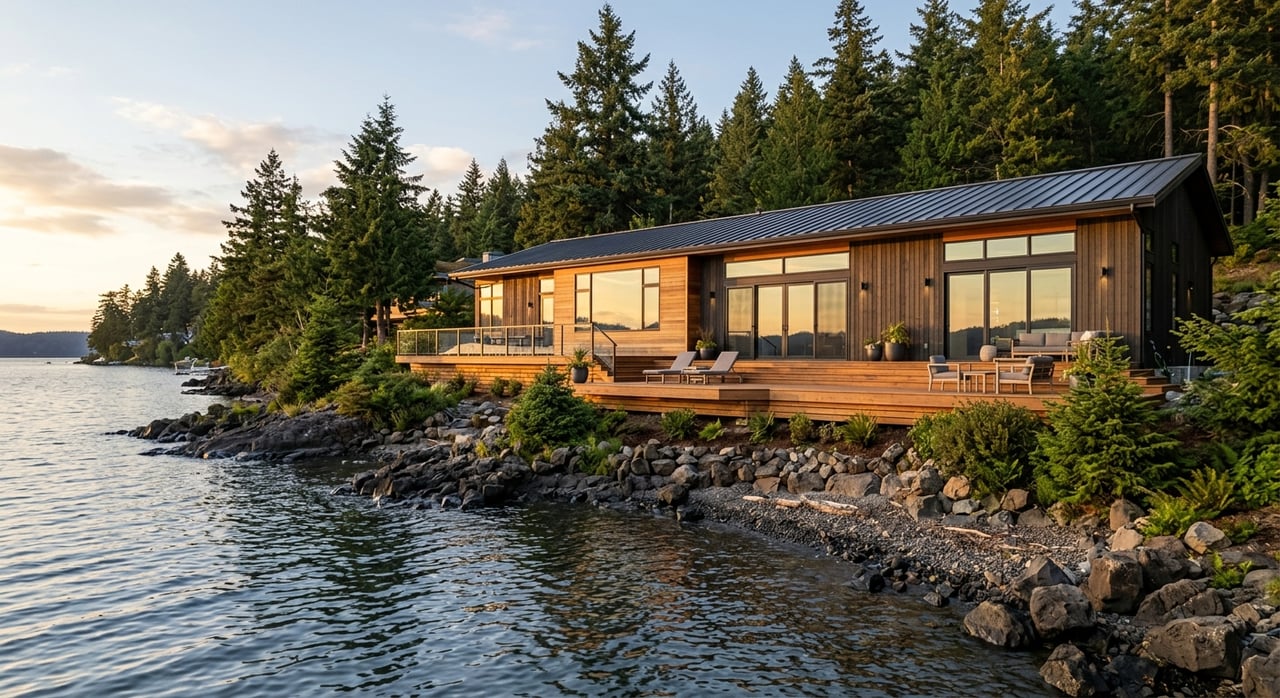
If waterfront living is on your wish list, Lake Oswego can look like the best of both worlds: beautiful views, easy access to the water, and a strong sense of place. At the same time, buying on or near Oswego Lake comes with more rules, planning, and nuance than many buyers expect. If you want a clear picture of the lifestyle and the tradeoffs, this guide will help you understand what matters most before you make a move. Let’s dive in.
Why buyers look at Lake Oswego waterfront
Lake Oswego waterfront living centers on a 415-acre lake system that includes Oswego Lake and Lakewood Bay. According to Lake Oswego Corporation, more than 4,000 local households have deeded access privileges tied to the lake system. That combination of scenery, recreation, and community identity is a big part of the appeal.
For many buyers, the draw starts with the setting itself. Lakefront homes often offer direct water views, a close connection to outdoor activity, and a shoreline environment that feels distinct from a typical suburban street. In Lake Oswego, that visual experience is important enough that waterfront rules are designed in part to preserve direct lake-facing views from primary living areas.
Views are part of the value
On many waterfront properties, the view is not just a bonus. It is a central part of how the property lives day to day and how buyers often judge value. Lake Oswego Corporation’s waterfront standards reflect that by focusing on protecting direct views toward the lake.
That matters when you think about resale as well as enjoyment. If you are buying a waterfront home here, you are often investing in a view corridor, not just a lot line. It is one reason these homes can feel so special, but it is also one reason the rules tend to be more detailed.
Recreation starts close to home
Another major benefit is the ability to get on the water with less effort. The Oregon State Marine Board describes Oswego Lake as a mixed-use waterbody used for swimming, nonmotorized paddling, and motorboats. That variety gives waterfront living an active, outdoors-oriented feel.
Still, the experience is not casual in the way some buyers imagine. Public entry at Lower Millennium Plaza Park is managed by the City of Lake Oswego, and that access point is limited to nonmotorized craft and swimmers, with a maximum watercraft length of 18 feet there. For paddlers, the Marine Board notes that a wearable life jacket, a sound-signaling device, and a waterway access permit are required.
Understand lake access first
One of the biggest points of confusion for buyers is access. Not every home near the lake has the same privileges, and not every waterfront or lake-area property works the same way. This is one of the first details you will want to verify when comparing homes.
Lake Oswego Corporation says access to an easement is a privilege, not a right. It also states that more than 3,000 homes in Lake Oswego are eligible to use lake access privileges, but those privileges are tied to the residence and cannot be sold, purchased, or transferred separately.
Not all homes have equal privileges
This distinction can affect how you use the lake and how you evaluate a property’s value. Some homes may have direct waterfront features, while others may rely on deeded easement access. Easement lots are limited to easement members, along with their families and guests, according to Lake Oswego Corporation.
If you are house hunting in this market, it helps to ask very specific questions early. A home’s relationship to the lake may be a major lifestyle feature, but the details depend on the property itself. You do not want to assume two homes in the same general area come with the same access or use options.
Waterfront ownership means more oversight
The tradeoff for a distinctive shoreline lifestyle is usually a more regulated ownership experience. Waterfront improvements often involve permits, design standards, and ongoing maintenance responsibilities that go beyond a standard suburban lot. Buyers who know that upfront tend to make more confident decisions.
Lake Oswego Corporation says a facility permit is required for waterfront construction, installation, or modification on its property or for projects that abut the lake, lakebed, or adjacent waterfront areas. Its rules allow only docks, boathouses, and boat lifts to extend beyond the shoreline, and infill is prohibited.
Docks and boathouses need approval
If you are thinking about adding, rebuilding, or modifying a dock or boathouse, timing and approvals matter. Unauthorized work can lead to removal requirements, restoration costs, and fines. In other words, convenience and flexibility are not the same thing on the waterfront as they might be on an inland property.
There is also an ongoing cost component. Lake Oswego Corporation says annual assessments and license fees help fund safety patrols, water quality work, dredging, dock and access maintenance, and dam safety coordination. That structure supports the lake environment, but it also means ownership comes with shared operational responsibilities.
Seasonal timing affects projects
Waterfront maintenance often runs on a different calendar than ordinary home maintenance. If your property needs shoreline work, dock repairs, or utility updates near the water, you may need to plan around seasonal lake conditions and permit windows.
The City of Lake Oswego’s notice for the 2026 draw-down says Lake Corp will begin lowering the lake on October 1, 2026, with refill planned to begin on January 1, 2027. The city identifies dock repairs, boathouses, and utility repairs as common draw-down projects and advises owners to submit permits early.
Long lead times are common
That schedule is a good example of why waterfront ownership rewards planning. If you buy with the idea of making immediate changes, you may find that the practical timeline is longer than expected. Permits, seasonal access, and contractor scheduling can all affect when work actually gets done.
For buyers, this is less a reason to avoid the waterfront and more a reason to go in with realistic expectations. The homes can be exceptional, but the upkeep process is often more involved.
Privacy comes with design limits
Many buyers picture waterfront living as private and serene, and in many ways it is. But privacy is balanced with view protection and neighbor-impact rules. That means some exterior choices may be more limited than you would see elsewhere.
Lake Oswego Corporation’s standards say waterfront lighting must be shielded, low-profile, and directed away from the lake. It also notes that fences and hedges on its property may not exceed 4.5 feet.
Flexibility may be reduced
These standards are meant to preserve views and reduce impacts on adjacent properties. For you as an owner, that can mean less freedom with lighting, screening, and certain landscape or exterior design choices. The benefit is a shoreline environment that is more consistently managed, but the tradeoff is reduced flexibility.
This is one of the most important mindset shifts for buyers. In Lake Oswego, waterfront ownership often means trading some simplicity and design freedom for view preservation and a more coordinated lakefront setting.
Lake conditions can change use
Lake life is also seasonal in a practical sense, not just a visual one. Water quality conditions can affect recreation at certain times. If swimming or boating is central to your lifestyle, it is worth understanding that access does not always mean the same kind of use year-round.
For example, the Oregon Health Authority issued a recreational-use advisory for Oswego Lake on September 30, 2025 due to a possible harmful algal bloom. The City of Lake Oswego later reported that the advisory was lifted on October 15, 2025 and that signs at Lower Millennium Plaza Park were updated.
Recreational use is not static
That does not mean the lake is routinely unavailable, but it does mean conditions can temporarily change how the water is used. During bloom events, activities may be limited in affected areas. For buyers, this is part of understanding the full picture of waterfront living rather than focusing only on the postcard view.
Mixed-use water creates different moods
Because Oswego Lake is a mixed-use waterbody, the experience can vary depending on where you are and when you are out on the water. Some areas may feel quiet and residential, while others may feel more active. That variation is part of the character of the lake.
Marine Board guidance and city rules separate swimmers, paddlers, tow sports, and motorboats. The city’s rules for Lower Millennium Plaza Park also prohibit motorboats and personal watercraft at that public access point.
This matters when choosing the right property or access style for your needs. If you want a calmer day-to-day feel, location and access details can shape your experience just as much as the home itself.
How to evaluate the tradeoffs
The main tradeoff of Lake Oswego waterfront living is fairly straightforward. You are often exchanging some privacy, design flexibility, and simplicity for scenery, water access, and a highly distinctive setting.
For many buyers, that exchange is absolutely worth it. The key is making sure the property matches how you actually want to live, not just how the lifestyle looks from the outside. A thoughtful review of access, permits, seasonal maintenance needs, and shoreline rules can help you make that call with confidence.
If you are considering a waterfront move in Lake Oswego, local context matters. The right guidance can help you compare lake privileges, understand property-specific constraints, and weigh whether the lifestyle fits your goals. If you want a clear, practical conversation about waterfront homes or lake-area opportunities, connect with Kelly Calabria.
FAQs
Does every Lake Oswego waterfront home have the same lake access?
- No. Public access and deeded easement privileges are governed separately, and a property’s lake access depends on its specific eligibility.
Can you build or rebuild a dock on Oswego Lake anytime?
- No. Waterfront work typically requires permits through Lake Oswego Corporation, and many projects are planned around seasonal draw-down windows.
Is Oswego Lake always open for swimming and boating?
- Not necessarily. Recreational use can change temporarily if water quality advisories are issued, such as during harmful algal bloom events.
What rules affect Lake Oswego waterfront property improvements?
- Lake Oswego Corporation rules can affect docks, boathouses, shoreline extensions, lighting, fencing, and other waterfront-facing improvements.
What is the biggest tradeoff of Lake Oswego waterfront living?
- The biggest tradeoff is usually giving up some flexibility and simplicity in exchange for lake views, access, and a more managed shoreline environment.
