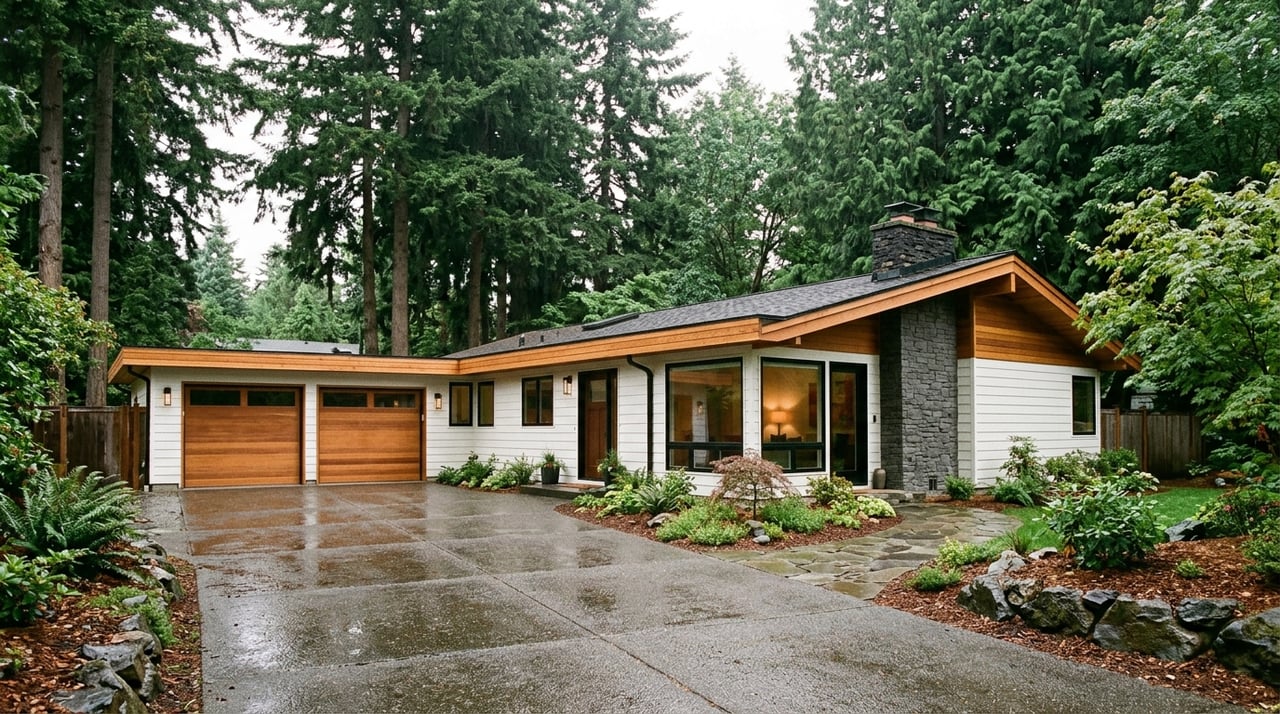
Wondering what it really takes to buy a single-family home in Raleigh Hills? If you have been watching west-side Portland suburbs and noticed Raleigh Hills sits in a higher price bracket, you are not imagining it. This small, established market offers a distinct mix of detached homes, larger lots, and architectural variety that can feel very different from more standardized neighborhoods nearby. In this guide, you will get a practical look at pricing, home styles, lot characteristics, and what to pay attention to before you buy. Let’s dive in.
Raleigh Hills at a Glance
Raleigh Hills is a compact west-side market with an established residential feel. Census Reporter estimates about 6,744 residents across roughly 1.5 square miles, with 3,292 housing units and an owner-occupied rate of 52.8%.
It is also a high-value market by local standards. Census data in the research report places the median owner-occupied home value at $913,700, and the Census Bureau data cited there reports median monthly owner costs with a mortgage of $3,356.
Recent sales activity shows how competitive this market can be. Redfin’s recent snapshot in the research report shows a 3-month median sale price of $1,172,620, a median price of $381 per square foot, median days on market of 5, and 12 sales in May 2026.
Because Raleigh Hills has a relatively small sales pool, prices can move around more quickly than in larger areas. When a few larger or more customized homes close in the same period, the median can shift fast.
What Single-Family Homes Look Like
If you are expecting rows of newer construction, Raleigh Hills may surprise you. The recent sales mix in the research report points to a housing stock shaped largely by mid-century and postwar homes, with some older character properties mixed in.
Examples in the recent sales sample range from a 1930 Storybook English estate to homes built in 1941, 1951, 1954, 1966, 1968, and 1976. That age range gives the neighborhood more architectural variety than many newer suburban developments.
A common theme in recent listings is updated older homes, not brand-new homes. Listing descriptions referenced remodeled mid-century day ranches, beautifully remodeled mid-century designs, one-level homes with major updates, and historic homes with modern improvements.
For you as a buyer, that means two things. First, you may find more personality and lot character here. Second, the quality and scope of remodeling can have a major impact on value.
Lot Sizes Often Stand Out
One of the clearest patterns in recent Raleigh Hills single-family sales is lot size. Many homes in the sample sit on parcels around a quarter acre, with repeated examples at 0.23, 0.25, 0.28, 0.29, and 0.30 acres.
That does not mean every property is identical. The research also notes a 0.53-acre estate parcel, but it stands out as an outlier rather than the norm.
For many buyers, these lot sizes are part of the appeal. If you value mature landscaping, more outdoor space, and less of a cookie-cutter feel, Raleigh Hills may check boxes that are harder to find in some nearby neighborhoods.
What Different Budgets Can Buy
Budget matters in every market, but in Raleigh Hills, how a home is priced often reflects more than square footage alone. Recent sales in the research report ranged from $575,000 for a 1951 four-bedroom, three-bath home on 0.28 acres to $1,275,000 for a 1976 four-bedroom, three-bath home on 0.29 acres.
Between those points, recent examples included sales at $750,000, $896,000, $1.07 million, and $1.13 million. That spread tells you just how much vintage, remodel quality, and site characteristics can shape value.
A practical way to read the market is this: updated postwar homes on roughly quarter-acre lots often show up in the $700,000 to $900,000 range, while homes above $1 million often cluster around larger lots, stronger architectural character, or more extensive remodeling. That is not a fixed pricing rule, but it is a useful pattern drawn from the recent sales mix.
Why Two Similar Homes Can Price Differently
In Raleigh Hills, two homes with similar bed and bath counts can still land far apart on price. That is because site quality often matters just as much as finish level.
The recent examples in the research report include level lots, private settings, creek or stream features, wooded sites, cul-de-sac locations, and flag lots. Those differences can affect privacy, usability, atmosphere, and buyer demand.
That is why it helps to look beyond headline stats. A remodeled home on a private, level lot may compete in a very different way than a similarly sized home with less usable outdoor space or a more challenging site.
How Raleigh Hills Compares Nearby
If you are choosing between Raleigh Hills and other west-side suburbs, price is one of the biggest differences. According to the research report, nearby median sale prices are notably lower in West Slope at $717,071, Garden Home-Whitford at $728,564, West Haven-Sylvan at $664,602, and Cedar Hills at $647,113.
That places Raleigh Hills roughly $444,000 to $526,000 above that nearby median sale-price band. In other words, Raleigh Hills is not just slightly more expensive. It operates in a meaningfully higher tier.
There is one interesting nuance with Cedar Hills. The research report notes Cedar Hills has a lower median sale price than Raleigh Hills but a higher median price per square foot at $408 versus Raleigh Hills at $381, which usually points to smaller homes or tighter footprints rather than a stronger overall price point.
Days on market also help show buyer demand. Raleigh Hills posted a median of 5 days on market in the recent snapshot, compared with 6 in West Slope, 10 in Cedar Hills, 16 in Garden Home-Whitford, and 21 in West Haven-Sylvan.
What Buyers Should Watch Closely
Because recent sample homes were built between 1930 and 1976, age-related due diligence matters. The research report specifically points buyers toward roof condition, drainage, plumbing and electrical upgrades, and the quality of past remodels.
That does not mean older homes are a problem. It means you should look carefully at what has been updated, how well it was done, and what may still need attention.
As you compare properties, it can help to focus on a few practical questions:
- Has the roof been replaced or substantially updated?
- What drainage features or improvements are in place?
- Have plumbing and electrical systems been modernized?
- Were renovations cosmetic, system-focused, or both?
- Does the lot offer the privacy, layout, and usability you want?
A polished kitchen can draw attention, but long-term value often comes from the less visible work behind the walls and around the site.
Who Raleigh Hills Fits Best
Raleigh Hills tends to appeal to buyers who want detached homes with more individuality. The research report suggests it is a strong fit if you value mature landscaping, larger lots, and a neighborhood feel that is less standardized than many newer subdivisions.
It may be less appealing if your top priority is finding the lowest west-side entry price. Buyers looking for a more budget-friendly option will usually find less expensive alternatives in nearby areas.
That tradeoff is important. In Raleigh Hills, you are often paying for a combination of location, lot character, architectural variety, and remodel potential or finished improvements.
What to Expect as You Search
In a small-volume market, the right home may not appear every week. With only 12 sales noted in May 2026 and a fast median market time, buyers should be prepared for limited choices at any one moment.
That makes clarity especially important. If you know your budget, preferred home style, lot priorities, and renovation comfort level, you can move more confidently when a match comes up.
It also helps to stay flexible on what matters most. Some buyers prioritize one-level living, while others care more about lot privacy, mid-century design, or the depth of updates already completed.
Bottom Line for Raleigh Hills Buyers
Raleigh Hills is a small, high-value single-family market where broad averages only tell part of the story. Here, site character, remodel quality, and architectural vintage often matter as much as raw square footage.
If you are drawn to established west-side neighborhoods with larger lots and a less uniform housing stock, Raleigh Hills may be worth a close look. The key is knowing how to compare homes carefully so you can separate surface appeal from lasting value.
If you want help evaluating Raleigh Hills homes or comparing them with other west-side options, Kelly Calabria offers local market guidance tailored to your goals.
FAQs
What is the typical price range for single-family homes in Raleigh Hills?
- Recent sales in the research report ranged from $575,000 to $1,275,000, with many updated homes and standout properties landing higher based on lot, character, and remodel quality.
What kind of homes are common in Raleigh Hills?
- Recent sales point to mostly detached homes built between 1930 and 1976, including mid-century, postwar, and some older character homes.
What lot sizes are common for Raleigh Hills single-family homes?
- Many recent sales clustered around quarter-acre lots, with examples from about 0.23 to 0.30 acres and occasional larger outlier parcels.
How competitive is the Raleigh Hills housing market?
- The research report shows a recent median of 5 days on market, which suggests well-positioned homes can move quickly in this small market.
What should buyers inspect carefully in older Raleigh Hills homes?
- Buyers should pay close attention to roof condition, drainage, plumbing and electrical upgrades, and the overall quality of any prior remodeling.
How does Raleigh Hills compare with nearby west-side suburbs?
- Raleigh Hills sits in a higher price tier than nearby areas like West Slope, Garden Home-Whitford, West Haven-Sylvan, and Cedar Hills, with recent median sale prices roughly $444,000 to $526,000 higher.
