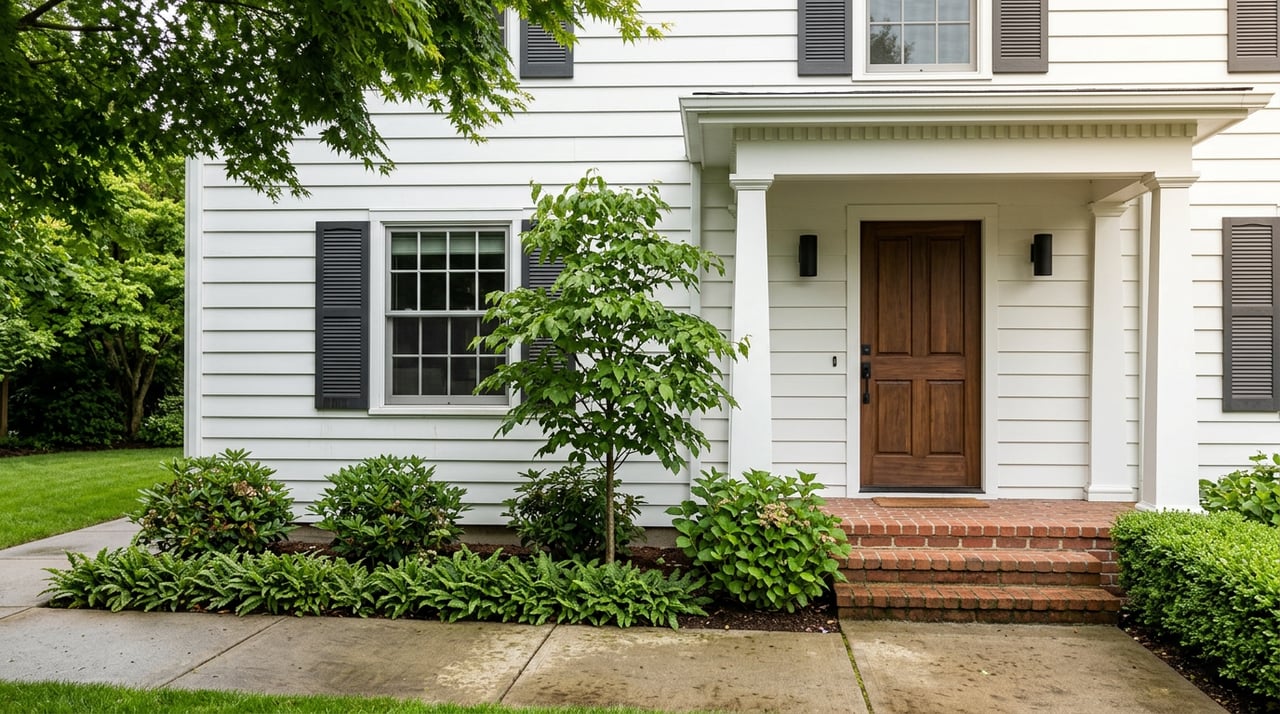
The clean-up starts weeks before the sign goes up. Sellers walk the lot with a landscaper and start pointing: the fir crowding the driveway, the maple that stopped leafing out on one side, the cedar that never fit the front bed. In Westlake, that walk is where more than one listing quietly runs into a wall, because the tree the owner is ready to cut is often the exact tree the City of Lake Oswego requires a permit to remove.
That is a small example of a bigger pattern. Westlake looks, on paper, like a straightforward Lake Oswego submarket. It behaves like one only until the transaction starts. The thesis of this guide is simple: in Westlake, the neighborhood median tells you almost nothing about your list price, and three local mechanisms, easement eligibility, private HOA overlays, and the city Tree Code, do most of the work of deciding whether your price holds from offer through closing.
The median is not your comp set
Recent numbers make Westlake look hot. Over the three months ending May 2026, Westlake home prices were up 22.6% compared to the same period last year, selling for a median price of $1.4M, and the Westlake housing market scored 87 out of 100 on Redfin's competitiveness index. Citywide, the picture is calmer: over the three months ending May 2026, Lake Oswego home prices were up 3.7% compared to the same period last year, selling for a median price of $969K, with homes selling after 22 days on the market on average.
| Snapshot | Westlake | Lake Oswego citywide |
|---|---|---|
| 3-mo median sale (through May 2026) | $1.4M | $969K |
| Median list, June 2026 | $1.22M | $1.05M |
| Days on market | 14 (Movoto, June 2026) | 22 (Redfin, May 2026) |
| Competitiveness score | 87/100 | Somewhat competitive |
The problem is not that the numbers are wrong. It is that Westlake sells across a wider structural range than the median suggests. Three and four-bedroom houses that fetch $800,000 to $1.2 million apiece sit back on 8,000 to 9,000-square-foot lots, and the neighborhood's winding lanes are lined with Colonial Revivals and modern traditional homes, many featuring Tudor-style adornments. Alongside those detached homes are attached townhome-style properties clustered closer to Westlake Park and the Kruse Way corridor, plus a handful of larger custom homes that anchor the top of the range.
A single quarter with two or three larger closings can move the neighborhood median by six figures. If you own a 1990s detached four-bedroom of average condition, you are not competing with the $1.4M number. You are competing with the three or four closings most similar to yours, and in Westlake that comp set is often thin. In June 2026, homes for sale in Westlake spent a median of 14 days on the market, a 39% decrease from June 2025, but that speed is a function of pricing precision, not permission to price above the segment.
Segment your comps by:
- Attached versus detached
- Original 1980s–90s stock versus a studs-out remodel
- Cul-de-sac lot versus a through street
- Walkable-to-Westlake-Park versus a Kruse Way frontage lot
Pull medians inside each of those buckets. The citywide $373-per-square-foot figure and the neighborhood $1.4M figure are useful as context. They are not useful as pricing anchors.
Three local mechanisms that decide whether your price holds
Once a Westlake home goes under contract, three specific pieces of local machinery tend to surface. Sellers who address them before listing keep their price. Sellers who discover them mid-inspection give it back.
1. Lake easement eligibility
Oswego Lake is private, and access is governed by deed. The Lake Oswego Corporation owns 20 lakeside properties around the lake to allow eligible easement members to exercise lake access privileges, and there are over 3,000 homes in Lake Oswego whose residents are eligible to exercise lake access privileges. Some Westlake homes carry that eligibility. Many do not.
The friction point for sellers: lake access privileges cannot be sold, purchased, or transferred, and you must reside in the residence with granted access to be a member of an easement. A listing that markets "lake access" without verifying eligibility at that specific address creates a real problem at inspection. Buyers' agents now routinely look up easement status through the Lake Oswego Corporation before writing an offer. If your home has easement eligibility, confirm it, note the easement association by name in your disclosures, and be accurate about slip availability and fees. If it does not, do not imply that it does.
2. The HOA overlay
Westlake sits inside one of Lake Oswego's recognized neighborhood associations, and many Westlake subdivisions also carry private HOA covenants. The rules governing daily life in those private HOAs are more specific than most sellers remember. The Westlake Home Owners Association establishes rules and guidelines for residents, who sign an enforceable covenant upon purchasing homes in Westlake, and some rules include prohibitions on sound systems that can be heard beyond the boundaries of the owner's property. There are also rules governing tree removal and tree preservation, and to remove any tree more than five inches in diameter at the trunk, there is a permitting process the owner must go through.
Two friction points here. First, buyers' lenders will ask for HOA documents, dues, and any pending assessments. Delays sourcing those documents can push a closing date. Second, unpermitted exterior work, a paint color change, a fence rebuild, a shed, can show up on inspection and become a repair credit request. Pull your CC&Rs, current dues statement, and meeting minutes before you list. If you did work in the last five years that arguably required HOA architectural review, get the paperwork in order now.
3. The Tree Code
The single most common late-stage friction in Lake Oswego listings is tree work. A permit is required to remove a tree 6 inches in diameter, measured at breast height 4.5 feet from the ground, or greater. That threshold covers a lot of what a seller thinks of as "just cleaning up." Stumps, shrubs, and hedges are not considered trees, and normal pruning does not require a permit, but topping, removing 50% or more of a tree, or damage resulting in its death are considered removal and can be subject to enforcement action.
Type II removals are the ones that trip up sellers. The applicant submits their application to the City and posts a public notice sign of the pending tree removal application on the property, the City posts the application on the Pending Type II Permit Applications page, and emails a notice of the application to the neighborhood association. That process is not fast, and mitigation planting requirements can add cost.
If you plan to remove anything meaningful, start the permit conversation with the Planning Department early. The city's Tree Code page lists permit types, and the counter is open weekday mornings for walk-ins.
Oregon's disclosure form is where these three meet
Every Westlake seller who is not claiming a statutory exemption fills out the same document. Oregon law under ORS 105.464 and 105.465 requires sellers to provide a Seller's Property Disclosure Statement to any buyer making a written offer, whether you're selling a house, condo, duplex, manufactured home, or timeshare. The form is not a formality. It is the record of what you knew when you signed.
The disclosure statement consists of 50+ questions about the property being offered for sale, the representations are based upon the seller's best knowledge, and a buyer has five business days from delivery of the disclosure statement to revoke the offer by delivering a signed written statement of revocation to the seller. The full statutory form lives at oregon.public.law if you want to read it before your listing appointment.
For Westlake sellers, three sections of that form deserve extra attention:
- Title and easements. Lake easement eligibility, if any, belongs here. So do shared driveways and any pathway easements crossing your lot.
- Community, HOA, and shared common areas. Note both the neighborhood association and any private HOA, with current dues and any pending special assessments.
- The catch-all material-defects question. At the end of the form there is a final, heavily scrutinized question asking whether there are any other material defects that could affect the property or its value, and you must answer "Yes" or "No" to this last question, you cannot choose "Unknown."
An "As-Is" clause in the sale agreement does not solve disclosure risk. An "As-Is" clause does not relieve a seller of the duty to disclose known material defects required by ORS 105.464. It can limit liability for defects you did not know about and reinforces the buyer's duty to inspect, but it will not shield you from claims based on knowingly withholding or concealing a material defect.
A pre-list order of operations for Westlake
The sequence matters. Doing this out of order is how sellers end up cutting price late in the deal.
- Pull your title report and confirm easement status at your specific address with the Lake Oswego Corporation.
- Request your HOA document packet, current dues statement, and reserve study if one exists.
- Walk the yard with a certified arborist before you touch a tree. Identify anything at or over the 6-inch DBH threshold and decide, with your listing broker, what actually needs to go.
- If you have done exterior work in the last five years, gather permits, HOA architectural approvals, and receipts.
- Draft the Oregon Seller's Property Disclosure Statement early, before the first buyer offer, so you are not answering under time pressure.
- Set price against your specific segment, attached or detached, condition tier, and lot type, not the neighborhood median.
Westlake is a strong market for well-prepared sellers. The 14-day median days on market in June 2026 reflects that. It also reflects the fact that mispriced or under-prepared listings sit visibly, and in a small submarket, sitting visibly gets expensive quickly.
Short FAQ
Do I have to fix everything the inspector flags?
No. You have to disclose known material defects on the ORS 105.464 form. Negotiation over inspection items is separate from disclosure. The two are often confused, and the difference is usually where deals get repriced.
Can I remove a tree the week before I list?
Only if it is under the 6-inch DBH threshold, is on the invasive list, or qualifies for a Type I, dead, hazard, or emergency permit. Everything else is a Type II with public notice and neighborhood association notification, which takes time. Start early.
Does easement eligibility add value at resale?
It can, when it is real and represented accurately. Slip availability, fees, and the specific amenities vary widely by easement, so buyers price it against the specific easement your home ties to rather than a generic "lake access" premium.
Is Westlake's HOA the same as the neighborhood association?
No. The neighborhood association is a volunteer civic group recognized by the City. Some Westlake subdivisions also have a private HOA with an enforceable covenant. Selling from a home with both means you produce two sets of documents.
If you are thinking about listing in Westlake and want a walk-through tailored to your specific block, easement status, and HOA overlay, Kelly Calabria offers a complimentary home valuation and pre-list consultation. Request one through the home valuation page, or read more about the neighborhood on the Westlake community page.
