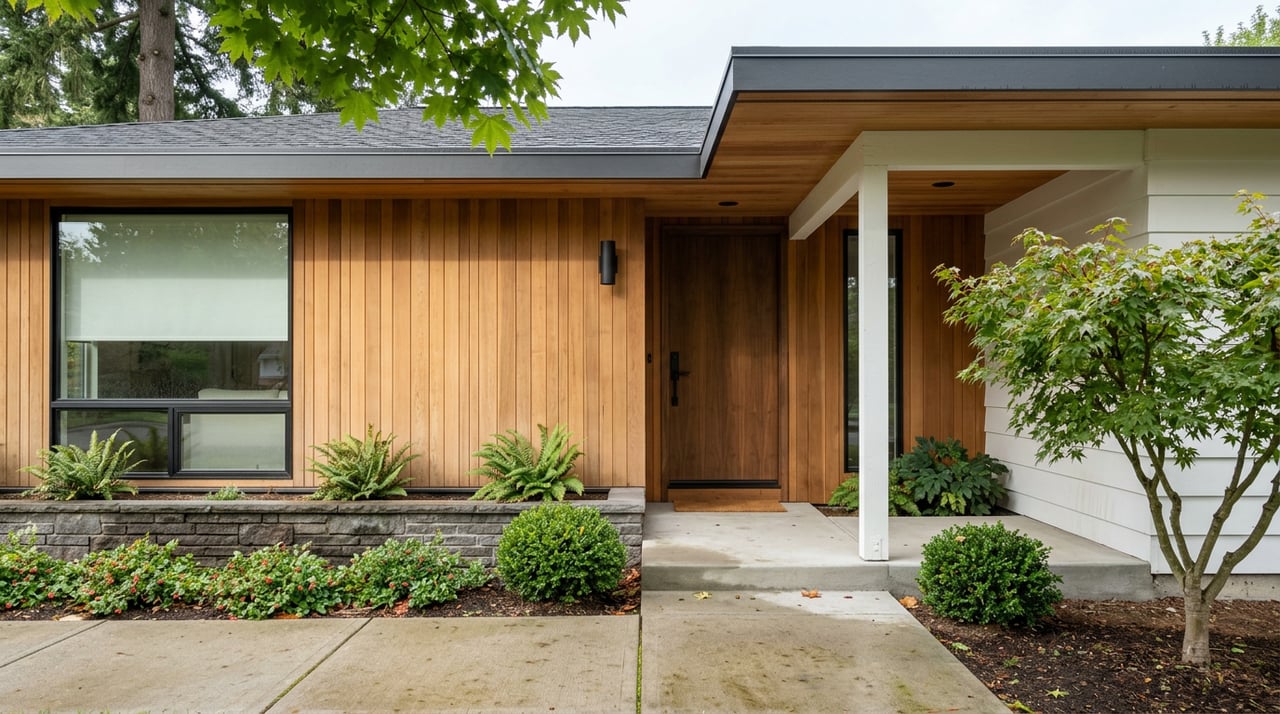
The inspector arrives on a Tuesday morning with a camera on a reel, a soil probe, and a checklist that has grown longer every year. In Raleigh Hills, where most single-family homes went up between the late 1950s and the mid-1970s, that checklist is what turns a smooth sale into a renegotiation, or the other way around. The house looks the same on Monday and Wednesday. What changes in between is what the buyer now knows.
Sellers who came up in this neighborhood tend to think of a listing as a marketing problem. In this housing stock, in 2026, it is closer to a documentation problem. The offer price is set by the market. The net proceeds are set by what shows up on inspection day and what you can hand the buyer before they ask.
The pre-listing decisions on your tank, your sewer lateral, and your electrical panel do not just protect the deal. They decide which comp set your home belongs to, and that is why the neighborhood can post a monthly median near $690,000 and a typical-value estimate near $932,000 at the same time.
The number behind the two medians
Two data points sit side by side. Redfin's most recent monthly reading shows a Raleigh Hills median sale price around $690,000 on thin volume, roughly eleven closed sales in the reporting month. Zillow's ZHVI, which weights the broader stock rather than what happens to change hands, sits near $932,000 as of mid-2026. For context, the Portland metro median was $572,250 in June 2026, down about 1.2% year over year, with sales volume up roughly 11.6% according to Homes.com.
The gap between $690K and $932K is not a data error. It is a segmented comp set. Homes that closed in that thin monthly cohort were, on average, the un-updated ones. The larger stock includes homes that have already resolved the mid-century punch list. Buyers pay two different prices for what looks like the same ranch or split-level from the curb, and the pre-list work is what decides which price your address gets compared to.
The metro backdrop matters here. Sales are up, inventory has expanded, and buyers have time. Homes.com's June read showed inventory at 10,326 listings, and Redfin puts the average Portland home on market at 14 days over the last three months. In a market with more options, the home that arrives with paperwork sells to the comp set above the median. The home that arrives with question marks sells to the comp set below it.
Three items decide which comp set you land in
The heating oil tank
Oregon DEQ estimates most homes built before 1970 were originally heated with oil, and Raleigh Hills fits that profile. Even where the furnace has been gas for decades, the tank often stayed in the ground. Under ORS 466.878, when real property is sold the seller must ensure any known abandoned heating oil tank has been emptied and must provide documentation of that to the buyer. Under ORS 105.464, the seller must disclose knowledge of underground storage tanks and any contamination, including tanks that were decommissioned years ago.
Decommissioning itself is voluntary once the tank is empty. Buyers and their lenders, in practice, treat it as required. A clean-soil decommissioning by a DEQ-licensed contractor typically lands in the $2,500 to $3,500 range. A leaking tank with soil impact can climb into five figures, and in unusual cases well beyond that. If the decommissioning on your property predates 2009, DEQ recommends re-sampling the soil, because the EPA reclassified naphthalene and ethylbenzene as carcinogenic that year and modern buyers order tests that older cleanups were not required to pass.
Records from March 2000 forward live in the Your DEQ Online public portal. Older files may only exist on paper. The single most valuable piece of paper you can put in a disclosure packet is the DEQ certification letter that closes the loop on a clean decommissioning.
The sewer lateral
Buyers in the Portland metro now order a sewer scope on nearly every older home. The service runs around $150 as a standalone. What it finds on a Raleigh Hills lateral is usually one of two things. Clay tile from the mid-century era develops joint offsets as the ground moves, and street-tree roots find those joints and grow into the pipe. Cast iron from the same era corrodes from the inside, and the bottom of the pipe eventually rusts through, so sewage drains into the soil under the slab rather than to the city main.
Repair costs sit on a wide range. A localized spot repair can be a few thousand dollars. A full replacement of a long lateral, or a trenchless liner, runs into the tens of thousands. A pre-list scope with a video file attached lets you either fix the line on your own timeline, at a competitive bid, or price the house honestly and refuse to renegotiate at inspection.
The aluminum branch wiring window
Washington County has one of the highest concentrations of 1965–1974 housing in the Portland metro, which is exactly the window when aluminum branch wiring was common in single-family construction. Beaverton, Aloha, and the west-Hillsboro corridor show it regularly, and Raleigh Hills homes from that decade are not exceptions.
The wiring itself is not the risk. The risk is what happens when someone adds a copper pigtail at an outlet without the right connector. Insurance underwriters have become sensitive to it, and buyers who plan to insure through a national carrier will sometimes require documentation before they will bind a policy. A licensed electrician can identify aluminum branch runs in an afternoon and, where needed, install code-compliant connectors at each termination. On a home with the original panel still in place, that report is worth ordering before the buyer's inspector opens the cover.
Two related items surface in the same era. Galvanized steel supply piping from the pre-1965 stock corrodes internally, restricts flow, and discolors water. Repipes commonly run $10,000 to $25,000. Original Federal Pacific or Zinsco panels, where they still exist, are a documented insurance concern in their own right.
What Oregon's disclosure form actually asks
Oregon's Seller's Property Disclosure Statement, required for most residential resales, asks direct questions about heating fuel, underground storage tanks, prior soil contamination, sewer system material and condition, and known electrical defects. The form is a yes-no-unknown grid, and "unknown" is a defensible answer only if it is actually true.
The practical consequence is that anything a pre-listing inspection surfaces becomes a "known" item that must be disclosed. That is not a reason to skip the inspection. It is a reason to sequence it correctly. If you learn about a problem on your own timeline, you can bid it out, fix it, and disclose the resolution. If the buyer's inspector learns first, you disclose the problem under contract pressure, and the buyer's contractor sets the price of the fix.
Pre-listing inspections in Oregon are typically $400 to $600, and the inspector must be licensed through the Oregon Construction Contractors Board. Specialty scopes are billed separately.
A pre-list order of operations
The sequence matters more than any single line item. In Raleigh Hills mid-century stock, the order that consistently protects price is:
- Pull property records and search the Your DEQ Online portal for any prior tank activity at the address.
- Order an oil tank sweep with ground-penetrating radar if no tank history is documented. Sweeps run around $150.
- Order a sewer scope with a video file, not just a written summary.
- Have a licensed electrician verify branch wiring type and panel status, in writing.
- Only after those three reports are in hand, book a general pre-listing home inspection so the report captures the whole picture rather than a partial one.
- Bid any remediation with two or three DEQ-licensed or CCB-licensed contractors, not one.
- Assemble a disclosure packet that includes every certification letter, invoice, and warranty. Give the buyer nothing to guess about.
Homes that arrive on market with that packet compete against the updated end of the comp set. Homes that arrive without it get compared to the eleven monthly sales that dragged the median toward $690,000.
FAQ
Do I have to remove an abandoned oil tank before I list?
No. State law requires the tank to be emptied and the sale to be disclosed. Decommissioning is voluntary. In practice, buyers and their lenders in Washington County expect a DEQ certification letter, and the absence of one becomes a price negotiation.
My tank was decommissioned in the 1990s. Is that enough?
Sometimes. DEQ's clean-decommissioning registration program began in March 2000, so many older cleanups were never registered with the state, and pre-2009 soil testing did not screen for the same chemicals that current testing does. A buyer may ask for re-sampling. Getting ahead of that request is cheaper than answering it under contract.
What if the sewer scope finds root intrusion?
You have three options: repair before listing, credit the buyer at closing, or price the home with the finding disclosed. Which one nets more depends on the severity, the season, and how the rest of the house shows. A specific bid from a licensed plumber gives you leverage that a general estimate does not.
How long does the full pre-list workup take?
For most Raleigh Hills homes, the inspections themselves take one to two weeks to schedule and complete. Remediation, when needed, adds two to eight weeks depending on scope. Building that runway into the listing timeline is part of the strategy.
If you own a mid-century home in Raleigh Hills and are thinking about a sale in the next six to twelve months, the earliest conversation is the most valuable one. Kelly Calabria has represented sellers across Lake Oswego and Portland's west-side suburbs for two decades and can help you sequence the pre-list work so the buyer's inspector confirms what your disclosure packet already says. Request a free home valuation or seller consultation to start with the numbers that apply to your specific address.
